
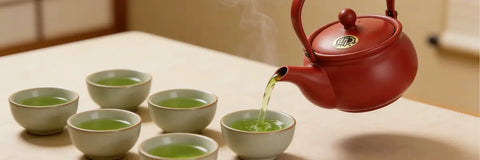
En uwade kyusu är en japansk tekanna med ett välvt handtag över toppen, utformad för att brygga större volymer te med bättre värmetolerans och enklare hantering jämfört med en kyusu med sidohandtag.
Namnet är enkelt uppdelat: uwade betyder övre hand och kyusu betyder tekanna. Tillsammans beskriver de exakt vad designen gör.
Denna tekanna är nära besläktad med ett kärl som kallas dobin , och de två termerna används ibland omväxlande. Den viktigaste skillnaden är att en dobin vanligtvis har ett välvt handtag tillverkat av ett separat material som bambu eller vävt halm.
Om du är nyfiken på vilken tekanna som passar din bryggrutin, behandlar den här artikeln hur designen med topphandtaget fungerar, var den presterar bäst och vad du ska leta efter när du väljer en.
Uwade Kyusu : En tekanna med topphandtag

En uwade kyusu skiljer sig från en kyusu med sidohandtag genom att använda ett toppmonterat handtag som stöder större volymer, fördelar vikten jämnare och möjliggör snabbare och mer praktisk hällning för flera portioner.
Sidohandtaget är utformat för bryggning av små satser. Eftersom handtaget är vinkelrätt mot pipen får du fin kontroll över flödeshastigheten, vilket är viktigt när man ska fördela den slutliga, starkare hällningen jämnt över flera koppar.
Topphandtagets design har ett annorlunda tillvägagångssätt. Det övre greppet fördelar vikten av en tyngre, fylligare kanna över handflatan snarare än genom en enda handledsrotation, vilket gör den praktisk när du brygger för flera personer samtidigt.
Storleks- och kapacitetsskillnader
kyusu med sidohandtag är vanligtvis kompakta och rymmer mellan cirka 150 ml och 400 ml. Utöver den volymen blir det besvärligt och instabilt att hälla med en hand med sidohandtag.
Topphandtag rymmer vanligtvis 400 ml och mer, och många dobin -modeller når 600 ml till 1 liter. Topphandtaget gör stora kastruller hanterbara, vilket är anledningen till att denna design skalar upp där Yokode-modellen inte kan.
Filterdesign och bladutrymme
Båda stilarna har ett internt filter, men konstruktionen skiljer sig åt. kyusu med sidohandtag har ofta tätt monterat keramiskt nät som passar för finbladiga teer som fukamushi sencha . Versioner med topphandtag tenderar att ha grövre filter eller enkla hål i pipväggen, vilket fungerar bra för större, mer öppna blad som bancha , hojicha och genmaicha .
Denna filterskillnad är ett praktiskt svar på de tetyper varje stil är utformad för att servera. Att tvinga en grovfilterkanna att brygga finbladiga teer leder till leriga, bladiga koppar.
Om du främst brygger fukamushi sencha och vill ha ett Tokoname -leralternativ som hanterar fina blad rent, är den här tekannan värd att ta en titt på. 👉 Tokoname Kyusu Fukamushi Tekanna
Vad är Uwade no Kyusu , och var används det?
Uwade no kyusu är helt enkelt den possessiva formen av samma term. På japanska förbinder *no* två ord på samma sätt som *does* på engelska, så uwade no kyusu översätts till *tekannan med det övre handtaget*. Båda namnen hänvisar till samma kategori av tekanna.
Du kommer att se båda stavningarna i produktlistor, teguider och keramikbutiker. Ingen av dem är mer korrekt än den andra, och i praktiken behandlas de som utbytbara.
I vardagliga japanska hushåll förekommer denna stil oftast vid bordet under avslappnade familjemåltider, där en större kastrull fylls en gång och hälls över flera koppar utan att återvända till köket. I ryokan-miljöer är det också vanligt att servera gästerna bancha eller hojicha före eller efter måltider.
Dobin -kopplingen

dobin är den mest kända formen av uwade no kyusu . Den är nästan alltid gjord av lergods och har en tsuru, det välvda handtaget, av bambu, trä eller halm. Dobin är särskilt vanliga på japanska restauranger, där de serverar hojicha , bancha och varmt bovetevatten efter sobamåltider.
Överlappningen mellan dobin och kategorin med handtag upptill är verklig. En dobin är tekniskt sett en tekanna med handtag upptill till sin design, även om namnet har sina egna kulturella associationer kring storlek och material.
Tetsubin och gjutjärn med topphandtag
Tetsubin , gjutjärnskitlar med ett tsuru-handtag ovanför, följer samma strukturella logik. Medan en tetsubin främst är en kittel för att koka vatten snarare än en bryggare för att dra blad, är det välvda handtaget som hanterar vikt och värme i princip identiskt.
Denna gemensamma härkomst förklarar varför uwade kyusu -metoden kan skalas från små keramiska krukor till mycket stora gjutjärnskärl utan att förlora sin funktionella logik. Både uwade no kyusu och tetsubin löser samma problem: hur man bär ett tungt, varmt kärl på ett säkert sätt.
Varför designen på det övre handtaget förändrar hällkontrollen

Att hälla ur en tekanna med topphandtag är en tvåstegsrörelse. Du greppar det välvda handtaget ovanifrån, lutar kannan framåt och låter gravitationen göra jobbet. Locket är vanligtvis fäst med sin egen passform eller ett litet skåra; det krävs vanligtvis ingen tumme för att hålla det på plats.
Detta skiljer sig från kyusu med sidohandtag, där hällkontrollen styrs genom en handledsrotation. Det ger finare kontroll över flödeshastigheten, särskilt när man tömmer en liten kanna över flera koppar i följd.
Med en tekanna med handtag upptill är upphällningen avsevärt tyngre och snabbare. Du jagar inte en exakt fördelning av koncentrationen över varje kopp. Du serverar en större volym snabbt och konsekvent. För en steg-för-steg-genomgång av hela bryggprocessen med en kyusu , täcker den här guiden teknik och vanliga misstag. 👉 Hur man använder en Kyusu
Värme- och hanteringsmaterial
En praktisk fördel med det övre handtagets position är att handtaget förblir svalare. Värme stiger från krukans kropp, men ett välvt handtag av bambu, rotting eller trä är inte i direkt kontakt med den keramiska kroppen, så det leder inte värme på samma sätt som ett keramiskt sidohandtag gör.
Detta är viktigt när man brygger te vid högre temperaturer. Hojicha och bancha tillagas vanligtvis med kokande eller nästan kokande vatten. Vid dessa temperaturer kan det bli obekvämt att hålla i ett vanligt sidohandtag, medan ett välvt handtag av separat material förblir säkert att greppa.
Användbarhet för vänsterhänta
kyusu med sidohandtag är riktade till sin design. Standardmodellen placerar handtaget på höger sida av pipen, vilket passar högerhänta användare. Vänsterhänta versioner finns men är mer sällsynta och behöver särskilt eftersökas.
En uwade kyusu har ingen dominant hand inbyggd i sin design. Det välvda handtaget sitter centralt över kannan, och hällriktningen bestäms av hur du vänder pipen. Detta gör den genuint ambidextr och mer lättillgänglig för vänsterhänta bryggare.
När en Uwade Kyusu fungerar bättre än andra tekannastilar
Denna tekanna utmärker sig i tre specifika situationer. Den första är när du brygger för en grupp på tre eller fler personer och behöver en kanna som rymmer tillräckligt med volym för alla utan att behöva dra ihop den igen. Den andra är när du använder teer som behöver kokande eller nästan kokande vatten, där ett varmt keramiskt sidohandtag blir ett praktiskt problem. Den tredje är när du vill ha en tekanna som en vänsterhänt person kan använda utan justering.
Det är inte rätt val för engångs- gyokuro eller högkvalitativ sencha , där exakt temperaturkontroll, långsam upphällning och småskalig extraktion är prioriterade. För dessa teer ger en kyusu med sidohandtag eller en hohin mer kontroll.
Om ditt hushåll dricker bancha , hojicha eller genmaicha dagligen och du regelbundet häller upp åt flera personer, rankas den här tekannatypen bland de bästa kyusu-tekannor för praktisk vardagsbruk.
Att brygga te korrekt i en Uwade Kyusu
Tetyper och mängder

Att brygga löste i en uwade kyusu är enkelt, särskilt för vardagsteer som bancha , hojicha och genmaicha . För bancha och hojicha , använd cirka 5 g blad per 200 ml vatten. Eftersom kannor med topphandtag tenderar att vara större, skulle en 600 ml brygd kräva cirka 15 g blad. Dessa är inte ömtåliga teer, och de tål små variationer i mängd utan att bli hårda.
Genmaicha följer liknande förhållanden. Den rostade riskomponenten absorberar vatten snabbt, så undvik att överblötlägga. En till två minuter räcker vanligtvis för en ren, nötig kopp.
Vattentemperatur och bränntid
Bancha och hojicha tolererar vatten vid eller nära 100 grader Celsius. Särskilt Hojicha gynnas av helt kokande vatten; följ en korrekt hojicha - bryggteknik för att få fram dess rostade, karamellaktiga toner rent. Genmaicha fungerar också bra vid 90 till 100 grader.
Blötläggningstiderna är korta. Sikta på 30 till 60 sekunder för hojicha och 60 till 90 sekunder för bancha och genmaicha . Tekannor med topphandtag häller snabbt, så ha dina koppar redo innan du lutar kannan. Häll av helt för att förhindra att bladen fortsätter att dra i kvarvarande vatten.
Att välja rätt Uwade Kyusu för dina behov
Det första beslutet är material. Oglaserad lergods, som Tokoname lera , utvecklar ett kryddat lager med tiden som subtilt påverkar varje brygd. Det fungerar bäst när du brygger samma tefamilj konsekvent. Glaserad keramik eller porslin är mer neutralt och lättare att rengöra, vilket gör det bättre lämpat för hushåll som växlar mellan olika teer. En uwade kyusu är också en omtänksam present till teälskare som tycker om att vara värdar och regelbundet brygger för en grupp.
Volym är den andra faktorn. En 400 ml kastrull med topphandtag räcker till två till tre personer. En 600 ml till 800 ml dobin -version rymmer fyra till sex personer bekvämt. Köp för det antal personer du regelbundet häller upp för, inte det maximala du någonsin kan behöva.
Kontrollera handtagets material. Handtag av bambu och rotting håller sig svala under bryggning vid hög temperatur och är traditionella för denna stil. Helkeramiska handtag finns på vissa modeller men leder värme om vattnet nästan kokar.
Slutligen, tänk på filtret. Om du planerar att brygga fukamushi sencha i en uwade kyusu , leta efter ett finare inre filter. För bancha , hojicha och genmaicha fungerar ett grövre filter bra och är mindre benäget att täppas till. Nio Teas kyusu-teset passar bra med olika lösbladsteer beroende på dina bryggpreferenser.
Kommentarer (0)
Det finns inga kommentarer till artikeln. Var först med att kommentera!